Caribbean, island in the Caribbean Sea, north of Venezuela.
Discovered and claimed for Spain in 1499, Aruba was acquired by the Dutch in 1636. Three main industries have since dominated the island's economy: go ...
Longitude: -69.9667
Your Location
Latitude: 39.04372
Longitude: -77.48749
Home country: United States
Distance to Aruba:
3,043.205 km
Terrain:
Flat with a few hills; scant vegetation.
Natural Resources:
NEGL; white sandy beaches foster tourism.
Industries:
Tourism, petroleum transshipment facilities, banking.
Population: 125,063
Most residents live in or around Oranjestad and San Nicolaas; most settlments tend to be located on the less mountainous western side of the island.
Area: 180 km2
slightly larger than Washington, DC
A flat, riverless island renowned for its white sand beaches; its tropical climate is moderated by constant trade winds from the Atlantic Ocean; the temperature is almost constant at about 27 degrees Celsius (81 degrees Fahrenheit).
| Code | Language |
|---|---|
| nld | Dutch |
| pap | Papiamento |
| Code | Currency | Symbol |
|---|---|---|
| AWG | Aruban florin | ƒ |
Capital City: Oranjestad
Local time: Thursday, January 29 at 10:05 am (GMT-04:00)
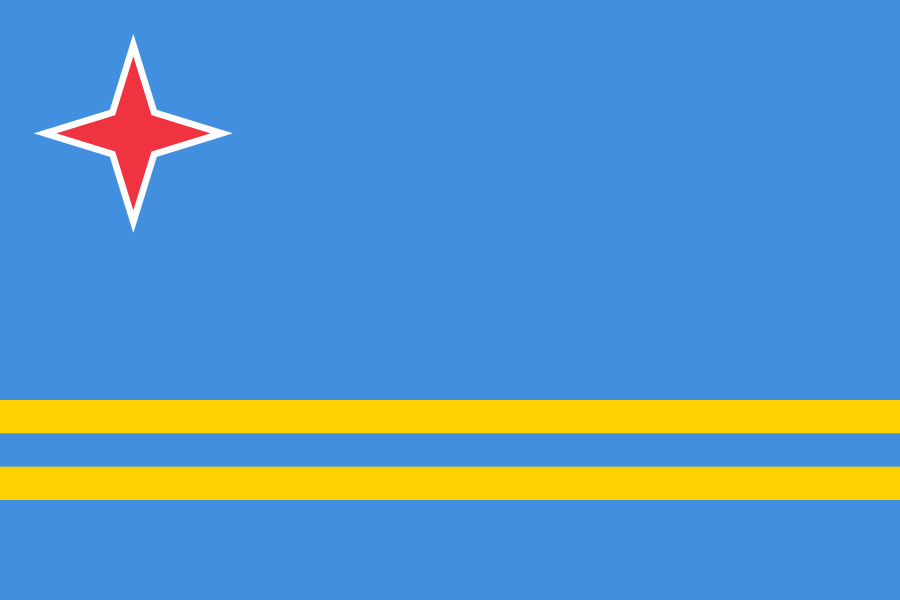
The flag of Aruba is a light blue field with two narrow, horizontal yellow stripes and a red star with a white outline.
Bordering Countries
Aruba has no bordering countries.
Visiting Aruba
You're in for a treat! Aruba is a fascinating place to explore, especially from April to August. Here's what you could encounter:
- Beautiful beaches and clear waters
- Vibrant nightlife and entertainment
- Rich cultural heritage
- High cost of living and travel
- Hurricane season from June to November
- Petty crime in tourist areas
- 1LOW RISK
Travel is relatively safe
- Aruban cuisine features seafood, stews, and tropical fruits.
- Popular dishes include keshi yena and pisca hasa.
- Dutch influences can be seen in pastries and cheeses.
- Relax on Eagle Beach
- Explore Arikok National Park
- Visit the California Lighthouse


 Clouds