Southern Africa, bordering the South Atlantic Ocean, between Namibia and Democratic Republic of the Congo.
The Angolan National Revolution began in 1961, and in 1975, Angola won its independence when Portugal’s dictatorship fell, a collapse that occurred in ...
Longitude: 18.5
Your Location
Latitude: 39.04372
Longitude: -77.48749
Home country: United States
Distance to Angola:
11,390.911 km
Terrain:
Narrow coastal plain rises abruptly to vast interior plateau.
Natural Resources:
Petroleum, diamonds, iron ore, phosphates, copper, feldspar, gold, bauxite, uranium.
Industries:
Petroleum; diamonds, iron ore, phosphates, feldspar, bauxite, uranium, and gold; cement; basic metal products; fish processing; food processing, brewing, tobacco products, sugar; textiles; ship repair.
Population: 37,202,061
Most people live in the western half of the country; urban areas account for the highest concentrations of people, particularly the capital of Luanda.
Area: 1,246,700 km2
about eight times the size of Georgia; slightly less than twice the size of Texas
The province of Cabinda is an exclave, separated from the rest of the country by the Democratic Republic of the Congo.
| Code | Language |
|---|---|
| por | Portuguese |
| Code | Currency | Symbol |
|---|---|---|
| AOA | Angolan kwanza | Kz |
Capital City: Luanda
Local time: Thursday, January 29 at 3:08 pm (GMT+01:00)
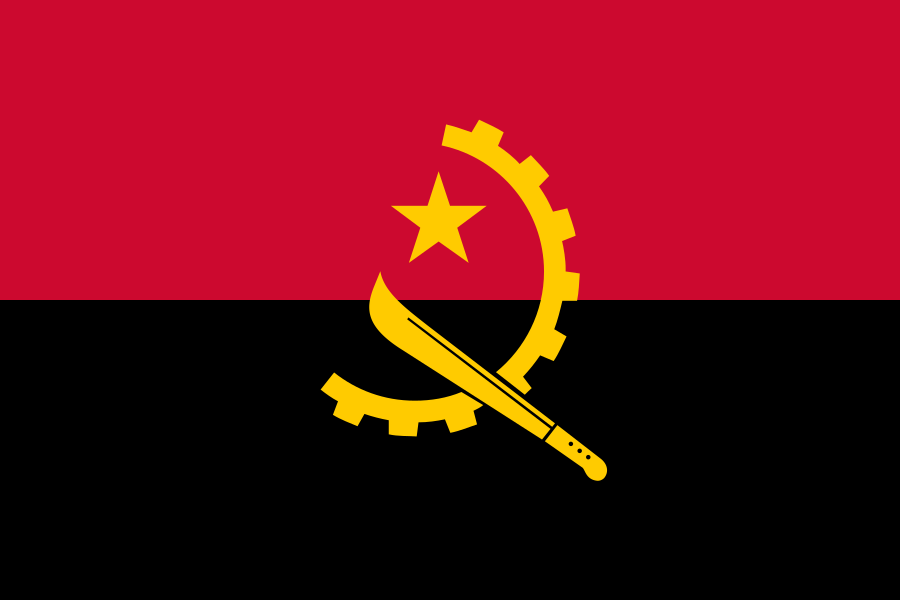
The flag of Angola features two equal horizontal bands of red and black, with a yellow emblem at its centre. This emblem consists of a five-pointed star within the hoist-side facing half of a cogwheel that is crossed on its lower end by a machete.
Bordering Countries
Angola is a member of the United Nations.
Visiting Angola
You're in for a treat! Angola is a fascinating place to explore, especially from June to October. Here's what you could encounter:
- Stunning natural landscapes
- Rich cultural heritage
- Diverse wildlife and national parks
- High levels of poverty and inequality
- Political instability and occasional unrest
- Health risks such as malaria
- 3MEDIUM RISK
Travel is usually safe, some areas are risky
- Angolan cuisine features cassava, fish, and spicy stews.
- Popular dishes include moamba de galinha and funge.
- Tropical fruits like mangoes and bananas are widely enjoyed.
- Visit the Kalandula Falls
- Explore Kissama National Park
- Relax on the beaches of Benguela


 Rain
Rain