Southern Asia, between China and India.
After Britain’s victory in the 1865 Duar War, Britain and Bhutan signed the Treaty of Sinchulu, under which Bhutan would receive an annual subsidy in ...
Longitude: 90.5
Your Location
Latitude: 39.04372
Longitude: -77.48749
Home country: United States
Distance to Bhutan:
12,511.361 km
Terrain:
Mostly mountainous with some fertile valleys and savanna.
Natural Resources:
Timber, hydropower, gypsum, calcium carbonate.
Industries:
Cement, wood products, processed fruits, alcoholic beverages, calcium carbide, tourism.
Population: 884,546
Area: 38,394 km2
slightly larger than Maryland; about one-half the size of Indiana
Landlocked; strategic location between China and India; controls several key Himalayan mountain passes.
| Code | Language |
|---|---|
| dzo | Dzongkha |
| Code | Currency | Symbol |
|---|---|---|
| BTN | Bhutanese ngultrum | Nu. |
| INR | Indian rupee | ₹ |
Capital City: Thimphu
Local time: Thursday, January 29 at 8:07 pm (GMT+06:00)
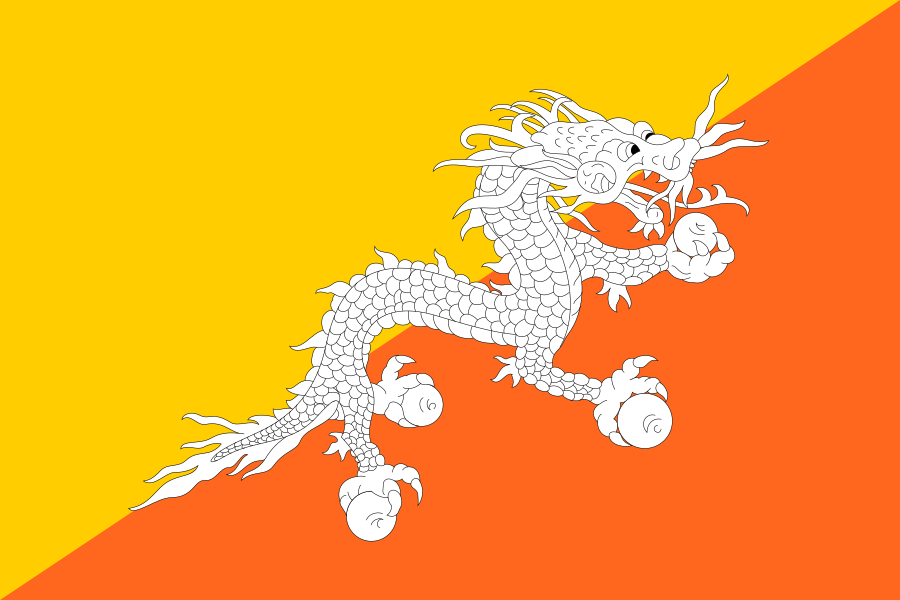
The flag of Bhutan is divided diagonally, from the lower hoist-side corner to the upper fly-side corner, into an upper yellow and a lower orange triangle. A fly-side facing white dragon holding four jewels in its claws is situated along the boundary of the two triangles.
Bordering Countries
Bhutan is a member of the United Nations.
Visiting Bhutan
You're in for a treat! Bhutan is a fascinating place to explore, especially from March to May, September to November. Here's what you could encounter:
- Rich cultural heritage and history
- Beautiful Himalayan landscapes
- Unique and vibrant festivals
- Limited infrastructure and healthcare
- High cost of travel and tourism
- Strict travel regulations
- 3MEDIUM RISK
Travel is usually safe, some areas are risky
- Bhutanese cuisine features rice, chili peppers, and dairy products.
- Popular dishes include ema datshi and momos.
- Buckwheat and red rice are staples in Bhutanese meals.
- Visit the Tiger's Nest Monastery
- Explore the Punakha Dzong
- Hike in the Phobjikha Valley


 Clouds