Central America, bordering the Caribbean Sea, between Guatemala and Nicaragua and bordering the Gulf of Fonseca (North Pacific Ocean), between El Salv ...
Once part of Spain's vast empire in the New World, Honduras became an independent nation in 1821. After two and a half decades of mostly military rule ...
Longitude: -86.5
Your Location
Latitude: 39.04372
Longitude: -77.48749
Home country: United States
Distance to Honduras:
2,814.865 km
Terrain:
Mostly mountains in interior, narrow coastal plains.
Natural Resources:
Timber, gold, silver, copper, lead, zinc, iron ore, antimony, coal, fish, hydropower.
Industries:
Sugar processing, coffee, woven and knit apparel, wood products, cigars.
Population: 9,529,188
Most residents live in the mountainous western half of the country; unlike other Central American nations, Honduras is the only one with an urban population that is distributed between two large centers - the capital of Tegucigalpa and the city of San Pedro Sula; the Rio Ulua valley in the north is the only densely populated lowland area.
Area: 112,492 km2
slightly larger than Tennessee
Has only a short Pacific coast but a long Caribbean shoreline, including the virtually uninhabited eastern Mosquito Coast.
| Code | Language |
|---|---|
| spa | Spanish |
Spanish (official), Amerindian dialects
| Code | Currency | Symbol |
|---|---|---|
| HNL | Honduran lempira | L |
Capital City: Tegucigalpa
Local time: Thursday, January 29 at 8:07 am (GMT-06:00)
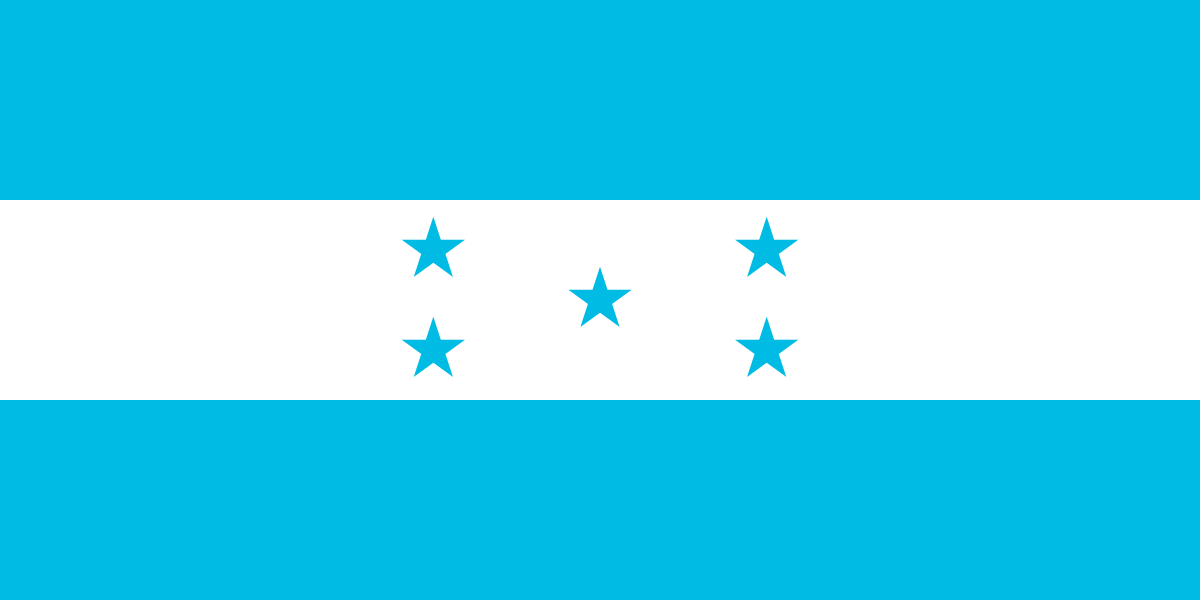
The flag of Honduras is composed of three equal horizontal bands of turquoise, white and turquoise, with five small five-pointed turquoise stars arranged in a quincuncial pattern at the center of the white band.
Bordering Countries
Honduras is a member of the United Nations.
Visiting Honduras
You're in for a treat! Honduras is a fascinating place to explore, especially from November to April. Here's what you could encounter:
- Beautiful beaches and clear waters
- Rich cultural heritage and history
- Diverse wildlife and natural parks
- High levels of crime in certain areas
- Political instability and occasional protests
- Poor infrastructure in rural areas
- 3.4MEDIUM RISK
Travel is usually safe, some areas are risky
- Honduran cuisine features beans, corn, and seafood.
- Popular dishes include baleadas and tamales.
- Fresh tropical fruits and coffee are widely enjoyed.
- Visit the ancient city of Copán
- Explore Roatán Island
- Relax on the beaches of Tela


 Clouds