Oceania, islands in the South Pacific Ocean, east of Australia.
The first humans settled in New Caledonia around 1600 B.C. The Lapita were skilled navigators, and evidence of their pottery around the Pacific has se ...
Longitude: 165.5
Your Location
Latitude: 39.04372
Longitude: -77.48749
Home country: United States
Distance to New Caledonia:
13,787.216 km
Terrain:
Coastal plains with interior mountains.
Natural Resources:
Nickel, chrome, iron, cobalt, manganese, silver, gold, lead, copper.
Industries:
Nickel mining and smelting.
Population: 304,167
Most of the populace lives in the southern part of the main island, in and around the capital of Noumea.
Area: 18,575 km2
slightly smaller than New Jersey
Consists of the main island of New Caledonia (one of the largest in the Pacific Ocean), the archipelago of Iles Loyaute, and numerous small, sparsely populated islands and atolls.
| Code | Language |
|---|---|
| fra | French |
French (official), 33 Melanesian-Polynesian dialects
| Code | Currency | Symbol |
|---|---|---|
| XPF | CFP franc | ₣ |
Capital City: Nouméa
Local time: Thursday, January 29 at 11:24 pm (GMT+11:00)
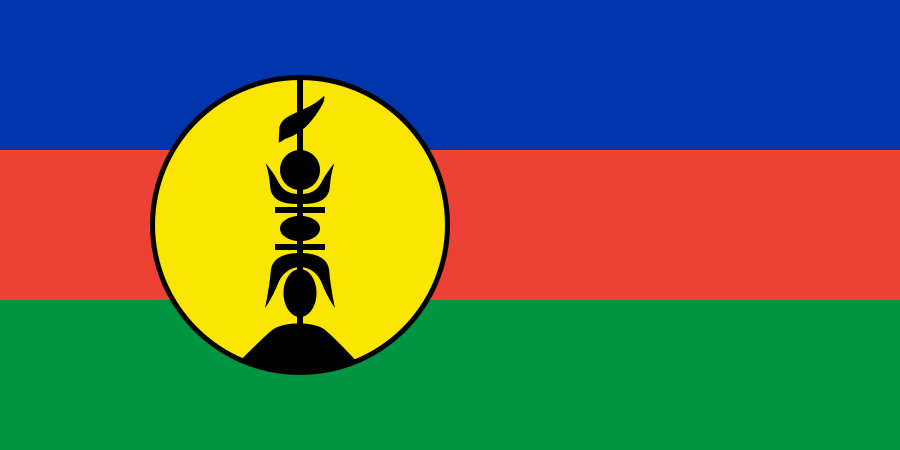
The flag of New Caledonia has horizontal blue, red, and green stripes with a yellow disc and a black tribal symbol.
Bordering Countries
New Caledonia has no bordering countries.
Visiting New Caledonia
You're in for a treat! New Caledonia is a fascinating place to explore, especially from April to November. Here's what you could encounter:
- Beautiful beaches and lagoons
- Rich Melanesian culture
- Diverse marine life and coral reefs
- Risk of cyclones from November to April
- High cost of living and travel
- Limited medical facilities in remote areas
- 4HIGH RISK
Travel is risky, prepare well and consider avoiding
- New Caledonian cuisine blends French and Melanesian flavors.
- Popular dishes include bougna and escargot de l'île des Pins.
- Seafood is fresh and widely enjoyed.
- Relax on the beaches of Isle of Pines
- Explore the Blue River Provincial Park
- Visit the Tjibaou Cultural Centre


 Clear
Clear