Southern Africa, between Mozambique and South Africa.
A Swazi kingdom was founded in the mid-18th century and ruled by a series of kings, including MSWATI II, a 19th century ruler whose name was adopted f ...
Longitude: 31.5
Your Location
Latitude: 39.04372
Longitude: -77.48749
Home country: United States
Distance to Eswatini:
13,396.586 km
Terrain:
Mostly mountains and hills; some moderately sloping plains.
Natural Resources:
Asbestos, coal, clay, cassiterite, hydropower, forests, small gold and diamond deposits, quarry stone, and talc.
Industries:
Soft drink concentrates, coal, forestry, sugar processing, textiles, and apparel.
Population: 1,138,089
Because of its mountainous terrain, the population distribution is uneven throughout the country, concentrating primarily in valleys and plains.
Area: 17,364 km2
slightly smaller than New Jersey
Landlocked; almost completely surrounded by South Africa.
| Code | Language |
|---|---|
| eng | English |
| ssw | Swazi |
| Code | Currency | Symbol |
|---|---|---|
| SZL | Swazi lilangeni | L |
| ZAR | South African rand | R |
Capital City: Mbabane
Local time: Thursday, January 29 at 5:49 pm (GMT+02:00)
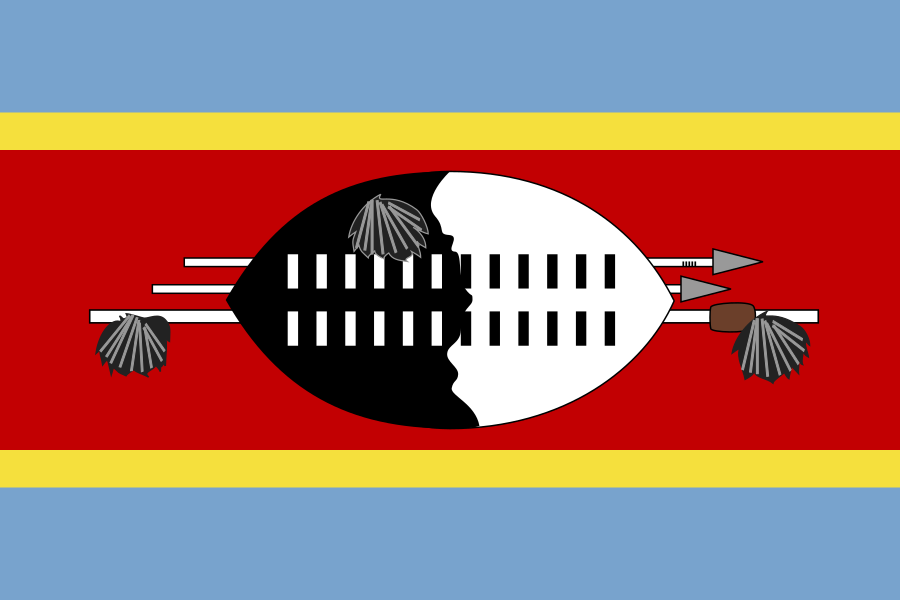
The flag of Eswatini is composed of three horizontal bands — a large central yellow-edged red band, and a light blue band above and beneath the red band. The red band is three times the height of the blue bands and bears a centered emblem made up of a large black and white Nguni shield covering two spears and a staff decorated with feather tassels, all placed horizontally.
Bordering Countries

Eswatini is a member of the United Nations.
Visiting Eswatini
You're in for a treat! Eswatini is a fascinating place to explore, especially from May to September. Here's what you could encounter:
- Rich cultural heritage and traditional festivals
- Beautiful landscapes and wildlife
- Stunning national parks and nature reserves
- Health concerns such as malaria
- Occasional political instability
- Language barrier in rural areas
- 2.7MEDIUM RISK
Travel is usually safe, some areas are risky
- Swazi cuisine features maize, beans, and meats.
- Popular dishes include Sishwala and Inyama.
- Freshly brewed traditional beer is widely enjoyed.
- Visit the Mlilwane Wildlife Sanctuary
- Explore the Mantenga Cultural Village
- Attend the Umhlanga Reed Dance


 Clouds